
 0
0
 0
0
The landscape of safety training in Africa is evolving faster than ever. As we move into 2025, companies across logistics, construction, oil and gas, and manufacturing are rethinking how they train their workforce.
Traditional, classroom-based training models are no longer enough. High staff turnover, remote job sites, and increasing regulatory demands have made it difficult for businesses to keep everyone up to date.
Enter e-learning safety training — a scalable, affordable, and efficient solution that’s helping organisations strengthen safety culture while maintaining compliance. With Africa’s digital transformation accelerating, now is the moment for safety leaders to take advantage of these tools and build a safer, smarter future.
Why Traditional Safety Training Is Losing Ground
For decades, most African companies relied on classroom or workshop-style safety training. While effective in small settings, this approach comes with significant challenges in today’s fast-paced industries:
-
Difficult to scale: In-person sessions are hard to coordinate across multiple regions or job sites.
-
Inconsistent delivery: Training quality varies depending on the trainer or facility.
-
Time-consuming: Scheduling sessions disrupts operations and delays onboarding.
-
Costly to repeat: High turnover means paying repeatedly for travel, trainers, and printed materials.
These barriers often result in gaps in compliance, inconsistent understanding of safety procedures, and increased risk exposure.
By contrast, e-learning platforms make safety education accessible, standardised, and data-driven — helping businesses stay audit-ready with minimal disruption.
The Rise of E-Learning Safety Training in Africa
Across Africa, companies and regulators are recognising the advantages of digital learning. The combination of growing mobile internet access, affordable cloud technology, and younger, tech-savvy workforces has set the stage for a revolution in compliance and safety training.
Here’s what’s driving this shift:
✅ Kenya: Transport and logistics firms are adopting digital modules for driver onboarding, reducing the need for centralised classroom sessions.
✅ Nigeria: Manufacturing plants are integrating mobile-friendly e-learning for hazardous operations, improving safety compliance while cutting downtime.
✅ Ghana and South Africa: Regulators are encouraging digital record-keeping for compliance, making electronic certificates and dashboards the new norm.
This digital transition is not an isolated trend — it reflects a broader movement towards data-driven, digitally connected workforce development across the continent.
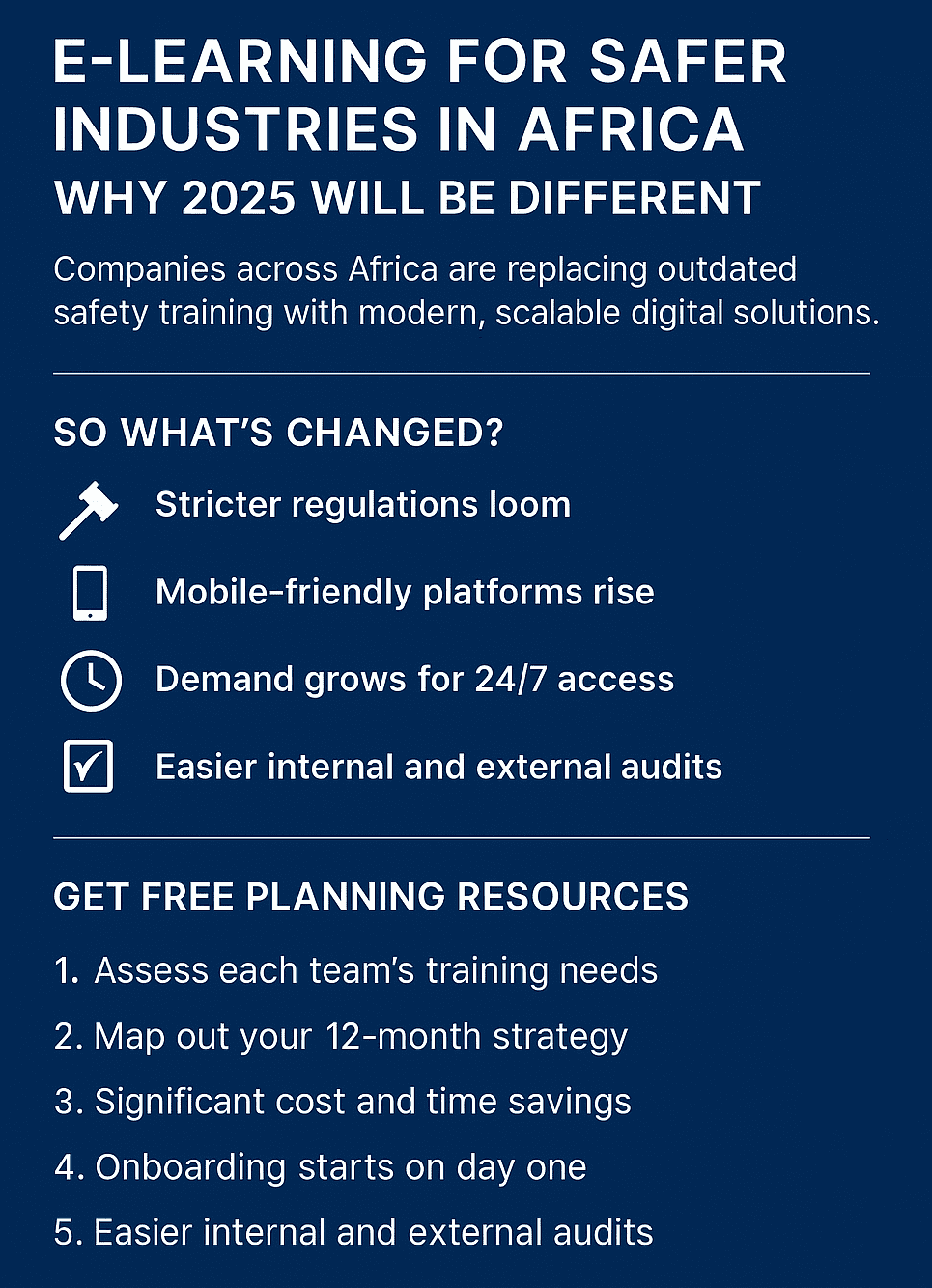
5 Reasons to Adopt E-Learning Safety Training Now
If your organisation still relies on traditional safety training, 2025 is the time to modernise. Here’s why:
1. Consistency Across Every Site
With e-learning, every employee receives the same training content, no matter their location or shift. This ensures unified understanding of safety protocols across warehouses, ports, or project sites.
2. Real-Time Tracking and Reporting
Modern learning platforms provide live dashboards where managers can monitor completion rates, expiry dates, and compliance gaps. This real-time visibility makes it easier to manage large teams and prepare for audits.
3. Lower Costs, Higher Impact
By eliminating travel and trainer costs, e-learning delivers better ROI. Digital modules and microlearning lessons also increase retention — employees can review short lessons anytime, reinforcing critical safety behaviours.
4. Faster Onboarding
New hires can start their mandatory training immediately, even before their first shift. This reduces onboarding time, minimises early safety risks, and gets staff operational faster.
5. Easier Audits and Compliance
Digital certificates and automatic record keeping mean you can prove compliance in seconds. Whether it’s for IMDG, ADR, ISO, or national safety standards, audit readiness becomes effortless.
How to Get Started with E-Learning Safety Training
Transitioning to e-learning may sound complex, but it can be implemented step by step.
Here’s how to start building your e-learning strategy:
-
Assess your training needs.
Map out the roles in your organisation that require safety or compliance training. Consider functions such as drivers, warehouse operators, port handlers, and administrative staff.
-
Select the right platform.
Choose an LMS (Learning Management System) that works offline or on mobile devices — essential for African regions with inconsistent internet. Look for platforms that support digital certification and multilingual options.
-
Create a 12-month training roadmap.
Align your learning schedule with regulations such as IMDG, ADR, and local transport or occupational safety laws. Plan refresher training every two years, and assign responsibility for tracking progress.
-
Blend formats for engagement.
Combine short microlearning videos, interactive quizzes, and scenario-based simulations to keep learners engaged and reinforce understanding.
-
Measure your results.
Track participation rates, completion times, and post-training performance. This data not only ensures compliance but also identifies opportunities to improve your safety culture.
👉 Download the Free E-Learning Strategy Template
To make it easier, SafetyNet Africa offers a ready-to-use planning tool to map training needs, assign responsibilities, and track KPIs.
Download the E-Learning Strategy Template →
The Broader Benefits of E-Learning Safety Training
Beyond compliance, e-learning helps organisations strengthen culture and resilience. When employees can access training anytime, anywhere, they feel empowered to take ownership of their safety.
This approach also supports environmental sustainability by reducing paper, travel, and printed materials — aligning with the growing ESG commitments of many African logistics and energy firms.
From Nairobi to Lagos to Durban, the companies investing in e-learning today are not only meeting regulations but also building stronger, smarter safety cultures that attract global partners and clients.
Challenges to Address
While e-learning delivers measurable benefits, success requires careful rollout.
Common challenges include:
-
Connectivity issues: Choose platforms with offline mode or downloadable lessons.
-
Low digital literacy: Include short introductions or support guides for first-time users.
-
Management buy-in: Demonstrate ROI by tracking reductions in incidents or training costs.
These are manageable with the right implementation strategy — and the returns far outweigh the effort.
Looking Ahead: 2025 and Beyond
By 2025, digital compliance systems are expected to become the norm for dangerous goods and occupational safety across Africa.
Companies that move early will not only reduce risk but also enhance reputation and competitiveness.
SafetyNet Africa continues to support this transition through certified e-learning solutions tailored to regional conditions — mobile-first, accessible, and built for African operations.
With Amendment 42-24 of the IMDG Code taking effect, there’s no better time to integrate e-learning into your training and compliance systems.
Final Thoughts
 E-learning safety training in Africa is more than a technology trend — it’s a practical, proven solution for protecting lives and improving performance. With regulators such as the International Maritime Organization updating the IMDG Code, digital learning tools are fast becoming essential for compliance and workforce resilience.
Whether you manage a port, warehouse, manufacturing plant, or transport fleet, digital training ensures your workforce remains competent, compliant, and confident in 2025 and beyond.
📘 Ready to build your e-learning strategy?
Download your free template or speak to our team today at www.safetynet.africa.



- Why Traditional Safety Training Is Losing Ground
- The Rise of E-Learning Safety Training in Africa
- 5 Reasons to Adopt E-Learning Safety Training Now
- How to Get Started with E-Learning Safety Training
- The Broader Benefits of E-Learning Safety Training
- Challenges to Address
- Looking Ahead: 2025 and Beyond
- Final Thoughts