The Future of IMDG Training in Africa: Key Trends to Watch

0 0
Read Time:6 Minute, 3 Second

The logistics sector across Africa is growing at one of the fastest rates globally, with trade volumes increasing and ports handling more dangerous goods than ever before. This growth brings both opportunity and responsibility. Safe and compliant transport of hazardous materials is non-negotiable under the International Maritime Dangerous Goods (IMDG) Code. Training sits at the heart of this requirement, yet the way training is delivered, updated, and tracked is changing rapidly. Across Africa, companies are recognising that IMDG training is no longer simply a compliance exercise but a strategic investment in people, systems, and long-term resilience. In this article we explore the emerging IMDG training Africa trends shaping the future of compliance and safety, and how forward-thinking organisations can prepare for what comes next.

Why IMDG Training Matters More Than Ever

The IMDG Code is the global standard that governs the safe transport of hazardous materials by sea. It exists to protect crew, cargo, ships, and the marine environment from the risks associated with dangerous goods. In 2025, Amendment 42-24 will come into force, bringing with it new classification requirements, changes in lithium battery rules, and updates in packaging and documentation. For logistics companies operating in Africa, where maritime transport is a lifeline for trade, the stakes are particularly high. Non-compliance can result in fines, shipment delays, and reputational damage. More importantly, it exposes staff and communities to unnecessary risks. This is why IMDG training is moving centre stage. It is the most direct way to ensure that staff understand their roles, apply correct procedures, and contribute to a culture of safety.

So what does the future of training look like? Several clear trends are already shaping how organisations across Africa are approaching IMDG compliance.

Digital Learning as the New Standard

The most visible shift is the rapid move towards digital and blended learning. Traditional classroom-based training is giving way to flexible online platforms that allow learners to study at their own pace and revisit modules when needed. For Africa, where internet connectivity is uneven but mobile adoption is strong, this is a game-changer. Mobile-first training solutions mean that staff at ports, warehouses, or even remote inland locations can access learning material without having to travel. Companies benefit from reduced training costs, faster onboarding, and the ability to scale programmes across multiple sites at once. Digital training also makes it easier to integrate updates whenever the IMDG Code changes, ensuring teams are never working with outdated knowledge.

Role-Specific Training

Another important trend is the move towards role-specific training. The IMDG Code makes it clear that any shore-based personnel involved in the transport of dangerous goods must receive function-specific training. However, not every role requires the same level of depth. A booking agent needs to understand documentation and segregation requirements, whereas warehouse staff need to focus on safe packing, labelling, and stowage. Dangerous Goods Safety Advisors (DGSAs) require a more comprehensive understanding to oversee compliance. By tailoring training programmes to specific roles, companies avoid wasting time on irrelevant content and instead ensure that each worker is fully competent in the duties that matter most to their function. This targeted approach also improves engagement, as staff see the direct relevance to their day-to-day responsibilities.

Continuous Refresher Training

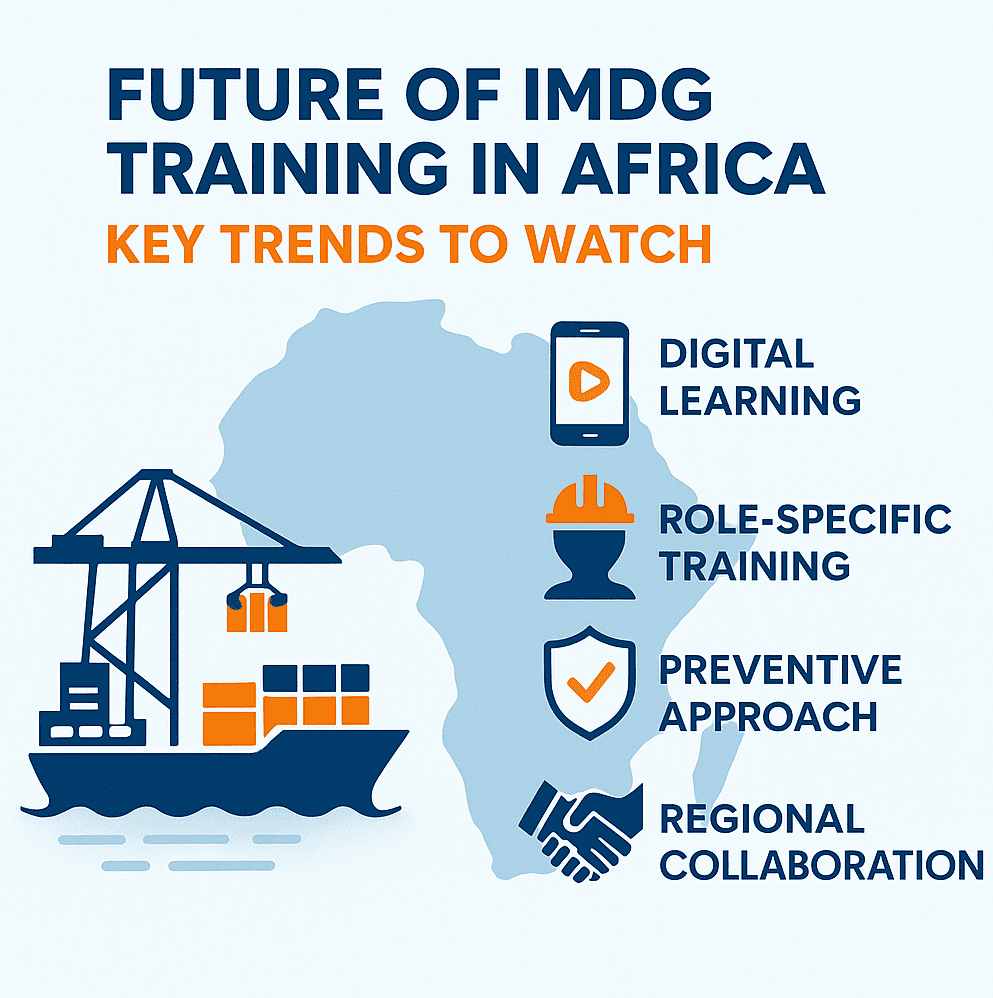
For too long, many organisations treated IMDG training as a one-off exerciIMDG training Africa trends infographic showing digital learning, role-specific training, refresher training, and regional collaboration in maritime logistics.se completed at the start of employment. That mindset is changing. Amendment cycles every two years and the pace of change in logistics mean that refresher training is essential. The IMDG Code itself emphasises the importance of continuous learning. Forward-looking companies are now embedding refresher programmes every two years or sooner if significant amendments are introduced. Refresher training helps keep compliance sharp, ensures that bad habits do not creep into daily practice, and demonstrates to regulators that the organisation takes safety seriously. By making training an ongoing process rather than a tick-box exercise, companies not only reduce risk but also build a stronger safety culture.

Integration with Compliance Systems

Training is only one part of the compliance puzzle. Increasingly, organisations are integrating training records into wider compliance management systems. Instead of keeping paper certificates in filing cabinets, HR and safety teams are adopting digital compliance tools that link training records with audits, incident reports, and performance dashboards. This integration offers two major advantages. First, it ensures that companies are always audit-ready with evidence of up-to-date training. Second, it gives managers real-time visibility of gaps so that retraining can be scheduled before non-compliance becomes an issue. For African companies with growing cross-border operations, digital compliance systems also make it easier to standardise processes across multiple locations.

Regional Collaboration and Recognition

A final trend to watch is the rise of regional collaboration. African ports and logistics hubs are increasingly recognising the need for consistent standards and shared recognition of training qualifications. As trade corridors expand and regional economic communities deepen integration, harmonisation of IMDG training becomes more valuable. Collaborative efforts between regulators, industry associations, and training providers are beginning to emerge. This not only reduces duplication for companies operating in multiple countries but also improves safety outcomes across the continent. For workers, it means their qualifications hold more value and mobility across borders, opening up new opportunities for career growth.

Challenges and Opportunities Ahead

Of course, the journey is not without challenges. Infrastructure gaps, uneven access to high-speed internet, and cost pressures can slow adoption. Yet these very challenges also create opportunities. Africa has already shown how mobile-first solutions can leapfrog traditional barriers in finance, communications, and healthcare. The same can happen in dangerous goods training. By focusing on accessible, localised, and digital-ready solutions, African logistics companies have the chance to set new benchmarks in compliance. Talent development is another promising area. A growing pool of local trainers, combined with international partnerships, is creating a stronger foundation for long-term safety leadership.

How SafetyNet Africa Supports Future-Ready Training

SafetyNet Africa is dedicated to making IMDG training both practical and accessible for the logistics sector. Our e-learning courses are tailored to the realities of African operations, designed to work even on low-bandwidth connections. Alongside training, we provide resources such as checklists, planners, and compliance toolkits that help HR managers, safety officers, and port handlers put knowledge into action. By combining international expertise with local relevance, SafetyNet Africa ensures that teams across the supply chain can stay compliant, audit-ready, and confident in their roles.

Conclusion: Building Safer, Smarter Maritime Logistics

The future of IMDG training in Africa is digital, role-specific, continuous, integrated, and collaborative. These trends are already reshaping how companies approach compliance, and they will only accelerate as trade volumes grow and new regulations come into force. For logistics companies, the choice is clear: adapt now and use training as a strategic advantage, or risk falling behind both in compliance and competitiveness. At SafetyNet Africa, we believe Africa has the opportunity not just to catch up but to lead in setting new standards for dangerous goods safety.

📥 Download our free infographic: Future of IMDG Training in Africa: Key Trends to Watch and explore more resources at www.safetynet.africa/resources.

About Post Author

admin

Happy
Happy
0 %
Sad
Sad
0 %
Excited
Excited
0 %
Sleepy
Sleepy
0 %
Angry
Angry
0 %
Surprise
Surprise
0 %

Smart Moves: How African Logistics Teams Are Embracing Data to Drive Safer Operations

0 0
Read Time:4 Minute, 14 Second

Africa’s logistics sector is in a new era. As trade corridors expand, infrastructure improves, and supply chains digitise, logistics teams across the continent are not just moving goods, they’re moving smarter. At the heart of this transformation lies one powerful shift: the growing use of data-driven safety practices.

From container ports in West Africa to inland hubs in East Africa, logistics leaders are recognising that safety is not just a compliance requirement, it’s a driver of performance, trust, and long-term growth. And data is helping them get there.

In this post, we explore how African logistics teams are using data to build safer operations, and what steps your team can take to follow suit.

Why Safety Still Needs More Attention in Logistics

Logistics is growing, but so are the risks. With increased volumes of dangerous goods, tight deadlines, and multimodal movement, even a single oversight can have high costs.

Historically, many logistics operations in Africa have relied on manual safety checks, verbal communication, or outdated documentation methods. As more businesses scale and regional integration accelerates, these methods no longer offer the reliability or traceability required.

That’s where data-driven safety in African logistics is changing the game.

What Do We Mean by “Data-Driven Safety”?

Data-driven safety means using structured, timely, and trackable information to improve how safety is monitored, enforced, and enhanced across logistics operations.

It goes beyond having a few spreadsheets or checklists. It’s about building a culture where:

  • Incidents are tracked and analysed for patterns

  • Training records are centralised and kept current

  • PPE usage is monitored and gaps are identified early

  • Emergency drills, inspections, and audits are logged and reviewed regularly

Data allows logistics leaders to spot weak points, fix them fast, and prevent future incidents. It is increasingly becoming a competitive advantage.

African Teams Already Leading the Way

Across Africa, we are seeing standout examples of how logistics teams are embedding data into their safety workflows.

  • In coastal warehouse operations, teams are digitising their dangerous goods handling procedures, recording staff exposure risks and mapping container flows to identify congestion points.

  • Port handlers and freight forwarders are building cloud-based systems to track training validity, flag overdue certifications, and streamline refresher planning.

  • Regional distributors are implementing QR-coded safety audits, which help supervisors track compliance across sites, even when they are not physically present.

These are not just “nice to have” systems. They reduce accidents, protect lives, and cut downtime.

Why Now? The Perfect Moment for Change

The logistics sector in Africa is uniquely placed to benefit from this shift:

  • Mobile-first tools are more accessible than ever, even in low-bandwidth settings

  • Continental trade agreements are driving harmonisation in compliance and reporting

  • Local capacity is growing, and African developers and safety professionals are building tools tailored to regional realities

If your team has been relying on paper records or unverified training practices, now is the perfect time to upgrade.

Where to Start: Building a Data-Driven Safety Culture

You don’t need to overhaul everything overnight. Start with key building blocks:

1. Digital Training Records

Switch from manual logs to shared digital systems. Record:

  • Who has been trained

  • What type of training they’ve received

  • When certificates expire

Use tools like SafetyNet’s Refresher Training Planner to build a reliable schedule.


2. Audit Checklists with Smart Tracking

Standardise safety inspections using checklists. Tools like our Audit-Ready IMDG Checklist help you stay aligned with IMDG and ADR standards, and make audits less stressful.


3. Incident Reporting Dashboards

Create a simple process for reporting and categorising incidents — slips, exposure to chemicals, near-misses. Even a Google Form is a good starting point. Reviewing trends helps reduce repeat risks.


4. Centralised SOP Access

Make sure all team members, from port supervisors to warehouse loaders, can access the latest standard operating procedures. Use cloud folders or mobile apps.


5. PPE Monitoring Logs

Keep digital records of PPE distribution, usage checks, and replacements. Many teams skip this, but consistent PPE tracking can reduce injury risk dramatically.


The Payoff: Why It Matters

Teams that invest in data-driven safety systems report:

  • Fewer compliance breaches and port delays

  • Lower injury rates and staff absenteeism

  • Stronger audit results and partner trust

Most importantly, they create environments where teams feel supported, not blamed — where safety is proactive, not reactive.


A Safer Future, Designed in Africa

Africa does not need to copy and paste solutions from elsewhere. The continent’s logistics growth presents an opportunity to leapfrog outdated practices and build systems that are modern, mobile, and rooted in real-world needs.

Data is the enabler, but mindset is the multiplier. If leadership treats safety data as a strategic asset, teams will follow suit.

At SafetyNet Africa, we believe that every logistics team deserves access to tools that make safety simple, digital, and empowering.


Ready to Start?

Explore our growing library of free tools:

  • ✅ Digital Training Planners

  • ✅ Audit-Ready Checklists

  • ✅ Role-Specific Guides

Infographic illustrating data-driven safety in African logistics, with icons representing real-time monitoring, predictive analytics, and smart warehouse tools.Visit: https://safetynet.africa/resources

Let’s build Africa’s logistics future on a foundation of smart, sustainable safety.


Read more

About Post Author

admin

Happy
Happy
0 %
Sad
Sad
0 %
Excited
Excited
0 %
Sleepy
Sleepy
0 %
Angry
Angry
0 %
Surprise
Surprise
0 %

Why a Strong Safety Culture Is Driving Progress in Africa’s Logistics Sector

0 0
Read Time:3 Minute, 33 Second

Africa’s logistics networks face unique pressures:

  • Rapid growth without standardised safety systems

  • Varied regulatory enforcement across ports and borders

  • High-risk cargoes (e.g. lithium batteries, corrosives, bulk fuels) increasingly moved by undertrained teams

  • Paper-based systems still used to track compliance

  • Lack of access to affordable, regionally relevant training

According to the International Maritime Organization, over 80% of global trade by volume is carried by sea. African ports handle increasing volumes of dangerous goods from agrochemicals and paints to lithium-ion batteries and flammable liquids yet too many operators remain unprepared for basic safety audits.

A single oversight such as expired training, mislabelled containers, or missing PPE can trigger delays, fines, cargo loss, or worse: human injury or environmental damage.


✅ The 5 Core Pillars of a Safety-First Culture

1. Leadership Commitment

Safety must start at the top. When senior leaders visibly prioritise safety by investing in training, asking questions, and rewarding safe behaviour it sends a strong signal.

In logistics firms where resources are tight, this visible commitment helps teams see that safety is not a luxury, it’s a business essential.

What you can do:

  • Include safety KPIs in management reviews

  • Empower safety leads at site level

  • Communicate safety wins across the company


2. Function-Specific Training

Generic one-off courses don’t work. What matters is relevance: training that aligns with the real risks faced by each role, from port stevedores to freight forwarders.

The IMDG Code (International Maritime Dangerous Goods Code) requires all shore-based personnel involved in handling DGs to receive function-specific training under Chapter 1.3 yet many companies are unaware or non-compliant.

Examples of overlooked roles:

  • Warehouse teams

  • Documentation staff

  • Transport managers

  • Port handlers

Tool to try: Who Needs What Training? Matrix


3. Digital Record Keeping

Certificates expire. Audits happen. And paper-based systems don’t scale.

If you operate across multiple sites or countries, tracking training and safety documentation with spreadsheets puts your business at risk. That’s why more logistics teams are adopting simple digital trackers that allow them to:

  • Monitor training validity

  • Identify compliance gaps

  • Export audit-ready reports

Tool to try: Digital Recordkeeping Toolkit


4. Daily Reinforcement

Training isn’t enough on its own it must be embedded into daily operations.

For example:

  • Warehouse supervisors checking PPE compliance at the start of each shift

  • Logistics coordinators double-checking UN numbers before dispatch

  • Safety briefings before large shipments

Positive reinforcement builds safety habits that stick.


5. Proactive Risk Reporting

In strong safety cultures, staff are encouraged to speak up. Whether it’s a mislabelled drum or a blocked fire exit, early action prevents escalation.

To encourage this:

  • Use anonymous reporting tools

  • Reward early hazard identification

  • Host quarterly “lessons learned” safety huddles


📉 The Cost of Inaction

In 2022, a logistics provider failed a compliance audit due to expired training records and improperly labelled DG containers. The result?

  • $50,000 in fines

  • 3-week port delay

  • Loss of two key clients

This could have been avoided with a digital tracker and a refresher training plan.


📈 Why Africa Has a Chance to Leap Ahead

Africa has an opportunity not just to catch up, but to lead.

Rather than replicating rigid Western compliance models, logistics firms across the continent are starting to design safety systems that work in low-bandwidth, mobile-first environments. Think:

  • WhatsApp-based refresher reminders

  • Mobile-accessible checklists

  • Bilingual safety signage

  • Offline e-learning for remote depots

We’ve seen innovation from safety startups in Kenya, Nigeria, and Senegal offering flexible, regionally attuned safety tools.

This isn’t about copying others. It’s about building smarter, context-aware systems.


🛠️ Free Tools to Support Your Safety Journey

Browse our free library of safety tools tailored to logistics teams:

🔹 Safety Readiness Checklist 

🔹 Training Planner for HR & Compliance

🔹 Audit-Ready IMDG Checklist

🔹 IMDG Code 2025 Summary Cheat Sheet

All resources align with IMDG Amendment 42-24 and are updated every 2 years to reflect the latest international standards.


Final Word

The future of African logistics is bright and safety is central to that future.

A well-built safety culture protects people, improves performance, and builds client trust. It also attracts better partnerships, funding, and long-term growth.

Let’s make safety a competitive advantage not a compliance burden


About Post Author

admin

Happy
Happy
100 %
Sad
Sad
0 %
Excited
Excited
0 %
Sleepy
Sleepy
0 %
Angry
Angry
0 %
Surprise
Surprise
0 %

How to Build a Safety-First Culture in African Logistics Operations

0 0
Read Time:3 Minute, 50 Second

1. Start With the Leadership Lens

Safety culture begins at the top. If leadership sees safety as a “tick-box” exercise, employees will too.

What logistics leaders should do:

  • Include safety metrics in weekly operations reviews

  • Lead by example: wear PPE, attend training briefings, conduct safety walkthroughs

  • Allocate budget for safety — not just for compliance, but as a business enabler

In many logistics companies, owners and managers are heavily involved in day-to-day operations. This presents a unique opportunity to model the behaviours and priorities that reinforce a safety-first mindset.


2. Make Safety Visible in Daily Operations

A true safety culture isn’t something you only discuss during training. It’s embedded in daily operations on the warehouse floor, in the dispatch office, at the loading bay.

Make it visible:

  • Display clear safety signage in multiple local languages

  • Use safety checklists at key handoff points (e.g. loading, transport, delivery)

  • Create a “safety board” with incident stats, near misses, and shoutouts for safe practices

When safety becomes part of the everyday rhythm, it shifts from being a chore to a norm. For example, a logistics hub in Ghana reduced injury rates by 42% after introducing 5-minute “Safety Huddles” at the start of each shift.


3. Address Hidden Strain: Fatigue, Shortcuts, and Informal Workarounds

Many logistics teams operate under immense pressure: inconsistent electricity, late shipments, understaffing, and long hours. This creates hidden strain — the kind that leads to rushed decisions and dangerous shortcuts.

To reduce strain and encourage safe behaviour:

  • Rotate staff regularly to reduce fatigue

  • Ensure break schedules are enforced, not optional

  • Map informal workflows and improve the process to reduce risk

Remember, most accidents aren’t caused by recklessness. They’re caused by teams trying to do more with less — fast.


4. Empower Every Role with Function-Specific Safety Training

Not everyone needs the same training. But everyone needs relevant training.

Under both local laws and international frameworks like the IMDG Code and ADR, different roles carry different responsibilities. A driver needs different instruction than a port handler or warehouse clerk.

Key training practices to implement:

  • Maintain a Training Responsibility Matrix for each site (we’ve created one for you – see resources)

  • Use visual and scenario-based training for low-literacy environments

  • Set reminders for certificate renewal every 2 years

Access our free Safety Training Planner for African Logistics Teams to map this out across multisite teams.


5. Reward and Reinforce Positive Safety Behaviour

A safety-first culture thrives when good behaviour is recognised.

Ideas for reinforcement:

  • Shout-outs for zero-incident weeks

  • Bonuses tied to team safety performance

  • Highlighting “Safety Stars” in team meetings or WhatsApp groups

Behavioural science shows that people repeat behaviours that get rewarded. Even small acknowledgements make a big difference in high-pressure environments.


6. Integrate Safety into Digital Tools and Record keeping

Most logistics teams still rely on paper-based checklists, WhatsApp messages, or verbal instructions. But digital tools can radically improve traceability and compliance.

Consider digitising:

  • PPE inventory logs

  • Incident reporting forms

  • Training certificate records

A Google Sheets-based Training Tracker is a great starting point. It helps HR and compliance leads spot expired certifications before an audit exposes them.


7. Localise and Translate Safety Materials

Multilingual teams are common across Africa. One of the biggest blockers to adoption is materials that don’t feel relevant or accessible.

Best practices:

  • Translate critical safety documents into local languages (e.g. French, Swahili, Hausa)

  • Use diagrams, photos, and audio/video formats when literacy is a challenge

  • Include context-specific examples that make sense for your region

You can download our Safety Readiness Checklist for a localised diagnostic tool.


8. Benchmark and Improve with Regular Internal Audits

Finally, culture is not “set it and forget it.” It requires regular reflection and refinement.

Build these habits:

  • Conduct internal safety audits quarterly

  • Use team surveys to measure safety perceptions and barriers

  • Review near misses to improve, not punish

The goal is not perfection — it’s continuous improvement.


Final Thoughts: Safety Culture Is a Competitive Advantage

In logistics, safety is not just a cost centre. It’s a trust signal. Clients, regulators, and insurers all look at your track record. A strong safety-first culture attracts better contracts, retains skilled workers, and builds long-term operational resilience.

Whether you’re managing a port, warehouse, or last-mile delivery team, the steps you take today will shape the future of safety across Africa’s logistics landscape.


Free Resources to Support Your Safety Culture

📋 Safety Readiness Checklist 
🗂 Training Planner for HR & Compliance Teams
📌 Training Responsibility Matrix by Role

👉 Access all free tools here

About Post Author

admin

Happy
Happy
0 %
Sad
Sad
0 %
Excited
Excited
0 %
Sleepy
Sleepy
0 %
Angry
Angry
0 %
Surprise
Surprise
0 %

Top 7 Safety Mistakes in Africa’s Logistics Sector and How to Avoid Them

0 0
Read Time:2 Minute, 15 Second

Logistics across Africa is expanding quickly. With this growth comes more shipments of dangerous goods. The IMDG Code sets strict rules, but many companies in Africa still fall into common safety traps. These mistakes put staff, communities, and cargo at risk. They also lead to fines and delays. Here are the top seven mistakes and how you can prevent them.

1. Poor Documentation of DG Shipments

Documentation errors are one of the most frequent violations. Missing or incorrect dangerous goods declarations create delays at ports. Worse, they put lives at risk when responders lack accurate information. Always use the latest IMDG templates and double-check all fields before dispatch.

2. Insufficient Training for Staff

Training is not optional under the IMDG Code. Every staff member who handles dangerous goods must be trained. Many companies in Africa overlook loaders, warehouse teams, or even drivers. Without training, staff make costly mistakes such as incorrect stowage. Keep a training matrix and track renewals every two years.

3. Weak PPE Compliance

Protective equipment is often issued but not enforced. Gloves, eye protection, and respirators are critical for chemical shipments. Supervisors must check PPE use during every shift. If equipment is missing or damaged, stop the work until it is replaced.

4. Incorrect Labelling and Placarding

IMDG requires specific hazard labels and placards for each class of dangerous goods. A common mistake is using outdated or faded labels. Some companies reuse old containers without removing irrelevant labels. This confuses handlers and inspectors. Always order fresh labels from approved suppliers and inspect them before loading.

5. Inconsistent Emergency Response Procedures

Accidents happen. Many companies have written procedures but do not practice them. Without drills, teams panic when a spill or fire occurs. Train staff on spill kits, evacuation, and first aid. Record every drill and review gaps for improvement.

Dangerous goods shipping mistakes in Africa: Checklist to prevent common compliance errors in logistics operations6. Ignoring Port and Customs Regulations

IMDG is international, but local port rules also apply. African ports often add requirements on documentation, handling, or inspection. Companies that fail to adapt to local rules face delays or confiscated cargo. Assign one staff member to monitor updates from your main ports.

7. Failure to Track Certificate Renewals

Training and equipment certificates expire. Many logistics teams fail audits because they cannot show valid records. Use a digital tracker for expiry dates. Share reminders with managers two months before certificates lapse.

Prevention Checklist

  • Use updated IMDG templates for all documentation

  • Train every role, not only drivers

  • Enforce PPE checks daily

  • Refresh labels and placards regularly

  • Run emergency drills quarterly

  • Monitor local port requirements

  • Track all certificates digitally

Avoiding these seven mistakes saves money, protects staff, and builds trust with clients. For a detailed checklist, visit the SafetyNet resources page.


About Post Author

admin

Happy
Happy
0 %
Sad
Sad
0 %
Excited
Excited
0 %
Sleepy
Sleepy
0 %
Angry
Angry
0 %
Surprise
Surprise
0 %

Future of IMDG Training in Africa: Trends to Watch

0 0
Read Time:2 Minute, 16 Second

The future of IMDG training in Africa is being shaped by rapid growth in trade, stricter regulations, and rising expectations from international partners. Dangerous goods transport is central to logistics on the continent, and compliance with the IMDG Code is now a priority. To prepare, organisations need to understand the trends that define the future of IMDG training in Africa and how to respond effectively.

Future of IMDG training in Africa infographic showing container ship, crane, Africa map, and icons for digital learning, role-specific training, preventive approach, and regional collaboration


Why the Future of IMDG Training in Africa Matters

The future of IMDG training in Africa matters because the region is experiencing:

  • Higher trade volumes at ports across West, East, and Southern Africa.

  • Stricter enforcement of IMDG Code rules by customs and regulators.

  • Demand from global clients for consistent compliance with international standards.

Without strong training systems, companies risk fines, shipment delays, and safety incidents.


1. Digital and Mobile Learning

A core feature of the future of IMDG training in Africa is the shift toward digital learning. Mobile-friendly platforms allow staff to complete modules on-site or remotely, ensuring flexibility across urban and rural locations.

2. Role-Specific Training

Different roles require different levels of knowledge. Drivers, loaders, warehouse teams, and safety officers cannot be trained the same way. The future of IMDG training in Africa will prioritise role-based modules to close knowledge gaps.

3. Preventive Approach

Many organisations currently train reactively, after incidents or audits. The future of IMDG training in Africa is proactive. Regular refreshers, emergency drills, and certificate tracking will prevent accidents and failed inspections.

4. Regional Collaboration

African countries are increasingly sharing expertise and aligning standards. Regional partnerships will define the future of IMDG training in Africa, creating hubs of excellence for dangerous goods management.


Opportunities for African Organisations

The future of IMDG training in Africa also presents opportunities:

  • Localised training content tailored to African ports and logistics conditions.

  • Centres of excellence that provide advanced training at regional hubs.

  • Technology-driven systems for certificate management and compliance tracking.

These opportunities will improve safety and strengthen Africa’s role in global supply chains.


SafetyNet Africa and the Future of IMDG Training in Africa

SafetyNet Africa is preparing organisations for the future of IMDG training in Africa with:

  • E-learning IMDG modules accessible anywhere

  • Role-specific courses for drivers, loaders, port handlers, and safety officers

  • Certificate management tools for HR and compliance teams

  • Practical resources adapted to African operational realities


Next Steps

The future of IMDG training in Africa is digital, preventive, and role-specific. Companies that adopt these practices now will reduce accidents, comply with audits, and strengthen their reputation with international partners.

Explore our IMDG Training Responsibilities Matrix for guidance on role-based training. For global context, visit the IMO IMDG Code.

About Post Author

admin

Happy
Happy
0 %
Sad
Sad
0 %
Excited
Excited
0 %
Sleepy
Sleepy
0 %
Angry
Angry
0 %
Surprise
Surprise
0 %

Digital Safety Training in Africa: Digital Safety Training in Africa

0 0
Read Time:2 Minute, 19 Second

Digital safety training in Africa is changing how organisations approach compliance. Traditional training, often classroom-based and paper-heavy, no longer meets the needs of fast-moving industries. As companies expand across borders, they need systems that deliver consistent knowledge, track certificates, and update content quickly. Digital safety training in Africa offers these benefits, but it also comes with challenges that must be addressed.

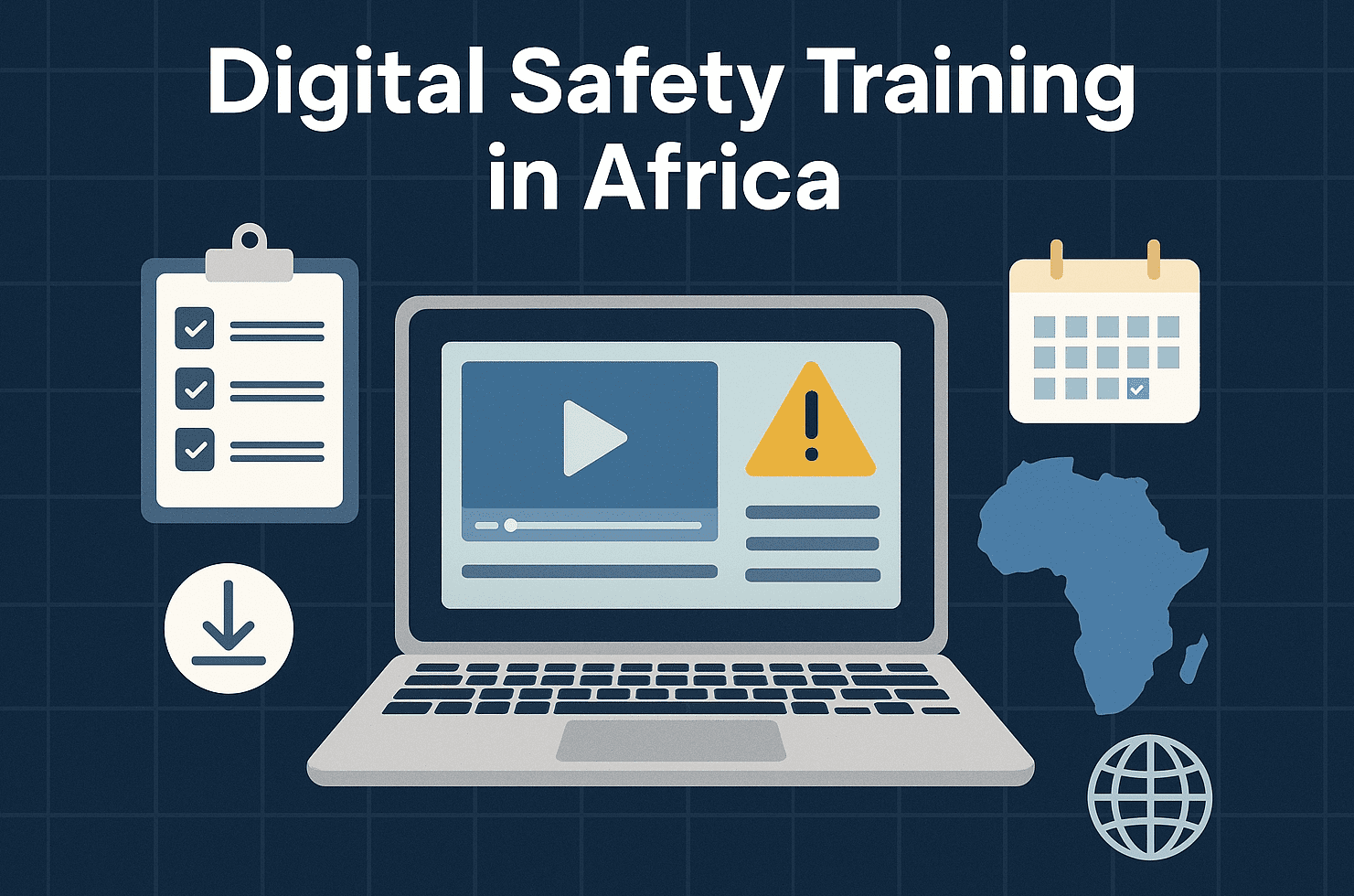
Digital safety training in Africa infographic showing laptop, checklist, calendar, and map of Africa.


Why Digital Safety Training in Africa Matters

Logistics, manufacturing, energy, and healthcare sectors in Africa are all under pressure to meet international safety standards. Dangerous goods transport, in particular, is tightly regulated by the IMDG Code and ADR rules. Without strong training systems, companies face delays, accidents, and fines.

Digital safety training in Africa makes compliance easier by:

  • Standardising content across all sites

  • Ensuring every role receives tailored modules

  • Enabling quick updates when regulations change

This shift ensures that safety training is no longer reactive, but integrated into daily operations.


Benefits of Digital Safety Training in Africa

The main benefits of digital safety training in Africa include:

  • Flexibility: Staff can complete courses anytime, reducing downtime.

  • Consistency: Content is the same across regions, preventing mixed interpretations of IMDG and ADR requirements.

  • Tracking: Certificates and renewals are logged automatically, reducing audit failures.

  • Cost Savings: Fewer repeat sessions and lower travel costs for in-person trainers.

  • Scalability: Training expands easily across multisite organisations.


Challenges of Digital Safety Training in Africa

Despite the advantages, digital safety training in Africa faces obstacles:

  • Connectivity: Reliable internet is still uneven across some regions. Offline access options remain essential.

  • Adoption Costs: Initial investment in e-learning platforms can be a barrier for smaller companies.

  • Management Buy-in: Leaders must enforce the use of digital systems to ensure staff complete courses on time.

Addressing these challenges is key to making digital safety training sustainable.


SafetyNet Africa’s Approach to Digital Safety Training

SafetyNet Africa provides a platform designed specifically for African organisations. Features include:

  • E-learning modules for IMDG and ADR compliance

  • Digital checklists, planners, and trackers

  • Certificate management for HR teams

  • Localised content that reflects African operating environments

By offering these tools, SafetyNet Africa helps companies adopt digital safety training in Africa without losing focus on their day-to-day operations.


Next Steps

Digital safety training in Africa is not just a trend. It is a practical solution to compliance and safety challenges. Companies that move early will reduce risks, save costs, and prepare their teams for future growth.

Start by reviewing your current training system. Where are certificates tracked? How consistent is the content across sites? Use these questions to identify where digital tools will add the most value.

For additional guidance, see our Safety Training in Africa: Why a New Approach Is Needed article. For international context, review the ILO Digital Learning for Safety resources.

About Post Author

admin

Happy
Happy
0 %
Sad
Sad
0 %
Excited
Excited
0 %
Sleepy
Sleepy
0 %
Angry
Angry
0 %
Surprise
Surprise
0 %

Safety Training in Africa: Why a New Approach Is Needed

0 0
Read Time:1 Minute, 50 Second

Safety Training in Africa: Why Safety Training in Africa Needs a New Approach

Safety training in Africa is central to logistics, manufacturing, energy, and healthcare. Many organisations already follow strong practices, but challenges such as cross-border rules, uneven resources, and certificate tracking demand new solutions. Safety training in Africa must evolve to stay effective.


Current Challenges in Safety Training in Africa

Variation in Standards
Safety training in Africa differs across countries. This reflects diverse regulations but creates problems for companies operating regionally.

Access to Resources
Some organisations have e-learning platforms, others depend on outdated materials. Consistency is needed to close these gaps.

Tracking and Renewals
Certificate expiry is a frequent pain point. Without tools, HR teams lose track. Safety training in Africa requires digital systems to manage this process.

Reactive vs Preventive Training
Much safety training in Africa happens after an audit or incident. A shift to preventive planning reduces risk and ensures compliance.


Why a New Approach to Safety Training in Africa Is Needed

Africa’s ports and trade hubs are growing fast. Regulators and clients expect alignment with IMDG and ADR standards. A new approach to safety training in Africa should be:

  • Consistent across borders

  • Accessible through digital platforms

  • Role-specific for drivers, loaders, port staff, and managers

  • Supported by certificate tracking systems

  • Preventive rather than reactive


SafetyNet Africa’s Role in Safety Training in Africa

SafetyNet Africa is building a dedicated platform to support organisations with:

  • E-learning courses tailored to IMDG and ADR

  • Digital checklists, trackers, and planning tools

  • Certificate management for HR leaders

  • Role-based training modules

  • Shared best practice across African industries


Benefits of Modern Safety Training in Africa

  • Reduced risk of incidents

  • Faster and smoother audits

  • Time savings for HR and compliance teams

  • Stronger reputation with regulators and partners

  • Better prepared, more confident staff


Next Steps for Safety Training in Africa

Organisations that invest now in modern safety training in Africa will see stronger compliance and safer teams. Explore our DG Safety Checklist Africa for a tool you can implement immediately.

You can also review the International Labour Organisation’s safety guidance for further international context.

Safety training in Africa is moving forward. SafetyNet Africa is here to support that progress.

Graphic showing the title Safety Training in Africa: Why a New Approach Is Needed, with an orange map of Africa and a large warning icon on a dark background.

About Post Author

admin

Happy
Happy
0 %
Sad
Sad
0 %
Excited
Excited
0 %
Sleepy
Sleepy
0 %
Angry
Angry
0 %
Surprise
Surprise
0 %

Safety Training in Africa: Why a New Approach Is Long Overdue

0 0
Read Time:3 Minute, 19 Second

For many African organisations in sectors like transport, logistics, manufacturing, and mining, safety training remains a complex challenge. Much of the available training content was not developed with African operational realities in mind and that needs to change.

But this isn’t about catching up. It’s about designing a better model from the ground up, one that reflects the unique strengths and requirements of African teams and industries.

At SafetyNet Africa, we believe safety training should be practical, context-specific, and inclusive  not simply copied from international templates that don’t reflect how and where African workers operate.

Why Localised Safety Training Matters

African economies are growing. With that growth comes responsibility: to protect workers, ensure compliance, and reduce avoidable incidents. While global regulations like the IMDG Code or ADR apply worldwide, their implementation looks different depending on geography, infrastructure, and regulatory enforcement.

Too often, companies try to implement international standards using training developed elsewhere. This risks confusing learners, overlooking key risks, and missing the opportunity to engage staff in a way that’s meaningful and effective.

That’s why we focus on:

  • Local content: Built with African industries in mind.

  • Practical access: Delivered in formats that match the realities of mobile usage, rural connectivity, and multilingual workforces.

  • Regulatory alignment: Grounded in both international standards and national agency requirements.

Infrastructure, Not Interest, Limits Access

A common misconception is that African teams lack interest in safety training. In fact, we’ve seen the opposite. But the way training is delivered often fails to match the conditions on the ground.

For example:

  • Rural logistics hubs may lack stable Wi-Fi but still need DG compliance training.

  • Port terminals need refresher training that can be done on shifts or in small teams.

  • Field operators are more likely to use mobile devices than desktops.

That’s why we’ve designed a mobile-first learning platform that works across devices and bandwidth conditions. Our goal isn’t to downgrade training, it’s to make high-quality learning more available and actionable.

Why a One-Size-Fits-All Model Doesn’t Fit Africa

Let’s be clear: African teams don’t need simplified versions of training. They need relevant ones.
Off-the-shelf safety courses often assume Western workflows, logistics models, and resources.
For example, many IMDG or ADR courses fail to address:
•The local enforcement authorities and documentation required
•The risk realities of regional transport routes
•The multilingual context that shapes how safety procedures are understood
We’ve worked with safety officers, regulators, and DG trainers across Ghana, Nigeria, Kenya and beyond to build courses that reflect local expertise, not just imported knowledge.

What Makes SafetyNet Africa Different?

We don’t believe in generic compliance checklists. We provide tools that help your teams work smarter, safer, and more confidently.

Our platform includes:

  • Interactive e-learning courses tailored to industries like transport, manufacturing, and ports

  • Digital SOPs and quick-reference guides for safety officers

  • Printable matrices and refresher planners for HR

  • Bilingual content where needed (e.g. English & French for ECOWAS markets)

Everything is built with audit-readiness, retraining cycles, and real-world use in mind.

Explore our tools:

Visit the SafetyNet Africa Resource Library →

For Employers and Safety Leads: This Is Your Opportunity

If you’re responsible for training delivery, safety oversight, or operational compliance, now is the time to upgrade your tools. A shift to more locally relevant, mobile-accessible training can:

  • Improve knowledge retention

  • Increase team engagement

  • Reduce audit failures and near misses

  • Align with both international and national compliance expectations

This isn’t about ticking a regulatory box. It’s about building confidence and competence on your team.

Download Free Tools to Get Started

Our growing free library includes:

✔️ Safety Officer Starter Kit

✔️ Refresher Training Planner for 2025

✔️ IMDG Code 2025 Cheat Sheet

All tools are created and reviewed by DG and safety professionals with experience in African compliance environments.

Follow us on LinkedIn for updates or contact us for early access to upcoming resources.

About Post Author

admin

Happy
Happy
0 %
Sad
Sad
0 %
Excited
Excited
0 %
Sleepy
Sleepy
0 %
Angry
Angry
0 %
Surprise
Surprise
0 %

SafetyNet Africa Launches First Ever Safety Training and Book Platform

0 0
Read Time:1 Minute, 47 Second

PRESS RELEASE

A warehouse worker in a colorful uniform and yellow hard hat receives documents from a smiling receptionist at a modern front desk. The office environment includes safety signage and organised shelves, highlighting themes of workplace safety, communication, and professionalism.
Efficient communication at work: A warehouse employee receives documents at the front desk, promoting a culture of safety and teamwor

SafetyNet Africa, a subsidiary of SafetyNet International LTD, proudly announces the official launch of www.safetynet.africa, the first platform of its kind dedicated to safety-related books, courses, and procedures. This groundbreaking hub empowers businesses, organizations, and individuals across Africa and beyond to enhance their safety knowledge and compliance.  Setting a New Standard for Safety Training

As the first platform of its kind, SafetyNet Africa provides a comprehensive collection of high-quality e-learning courses, books, and standardized safety procedures tailored to industries such as transportation, manufacturing, logistics, and healthcare. The platform combines practical tools with accessible, up-to-date information to minimize safety risks and ensure regulatory compliance.  “With www.safetynet.africa, we are pioneering a new approach to safety education and compliance in Africa,”.

“Our platform not only provides knowledge but also practical solutions that can be directly applied in daily operations.”

What SafetyNet Africa Offers

  • Books: A wide selection of publications covering safety regulations, including ADR, PGS15, and other international standards.
  • E-Learning Courses: Interactive training programs, such as Hazardous Materials Basics, VCA, and Working at Heights, available in multiple languages.
  • Procedures: Standardized protocols to help businesses comply with local and international safety regulations.
  • User-Friendly Interface: Learners and administrators can easily track progress, download certificates, and access historical data.
  • Free Safety News Updates: Visitors can sign up for free newsletters on www.safetynet.africa to stay informed about the latest safety trends, regulations, and best practices.

Why Now?

With increasing emphasis on safety across Africa, where businesses face complex regulatory requirements, SafetyNet Africa addresses the need for accessible and affordable safety resources. As the first platform of its kind, it sets a new benchmark for fostering a culture of safety awareness and compliance.

About SafetyNet Africa

SafetyNet International LTD is a leading provider of safety solutions dedicated to improving safety standards across the Globe. Combining years of expertise with innovative technology, the company supports organizations in creating safer work environments.


About Post Author

admin

Happy
Happy
0 %
Sad
Sad
0 %
Excited
Excited
0 %
Sleepy
Sleepy
0 %
Angry
Angry
0 %
Surprise
Surprise
0 %